You already know a shipping container can solve a storage problem. The harder choice is whether to buy one or rent one. I want to help you make that choice with clear numbers, simple questions, and a few checks that protect your money and your time.
When you start to look at shipping containers Bozeman, you will see sale and rental options side by side. The right pick depends on how long you need the space, what you plan to store, and where the container will sit.
I based my recommendation on what matters to a buyer or renter in the Gallatin Valley: local ownership, a deep inventory, the chance to see the unit before delivery, fair pricing, and careful placement on your property. MoCan Containers meets each of those points, and I explain how below.
By the end, you will have a short plan you can follow and a clear idea of who to call.
Start With How Long You Need the Space
This one question settles most of the decision.
Rent a container if:
- Your need has an end date, such as a remodel, a move, or a building project.
- You want to test how much space you need before you commit.
- Your business has a busy season and an off season.
- You prefer a lower monthly cost to a larger payment at the start.
Buy a container if:
- You expect to use it for a year or more.
- You plan to turn it into a workshop, garage, office, or small shop.
- You want to own an asset that holds its value.
- Your storage need repeats every year.
If you are unsure, I suggest you start with a rental. MoCan Containers sets rental terms from a single month up to long-term arrangements, and you can extend the term if your project runs long.
What Renting Looks Like
Rentals from MoCan Containers start at $150 per month for a 20-foot unit and $190 per month for a 40-foot unit. You keep the container as long as you need it, then they schedule a pickup.
Short-term rentals fit jobs like these:
- Home remodeling and renovation
- Storage between homes during a move
- Seasonal overflow of business inventory
- Events, festivals, and fairs
- Construction site storage for the length of a project
- Planting or harvest seasons on a farm
Every rental unit is wind and watertight, lockable, and built from heavy-duty steel. The long-term rental fleet is mostly one-trip containers that look clean and like new. If you plan to keep a unit for a year or more, ask about those.
What Buying Looks Like
You have two choices when you buy: new or used.
New One-Trip Containers
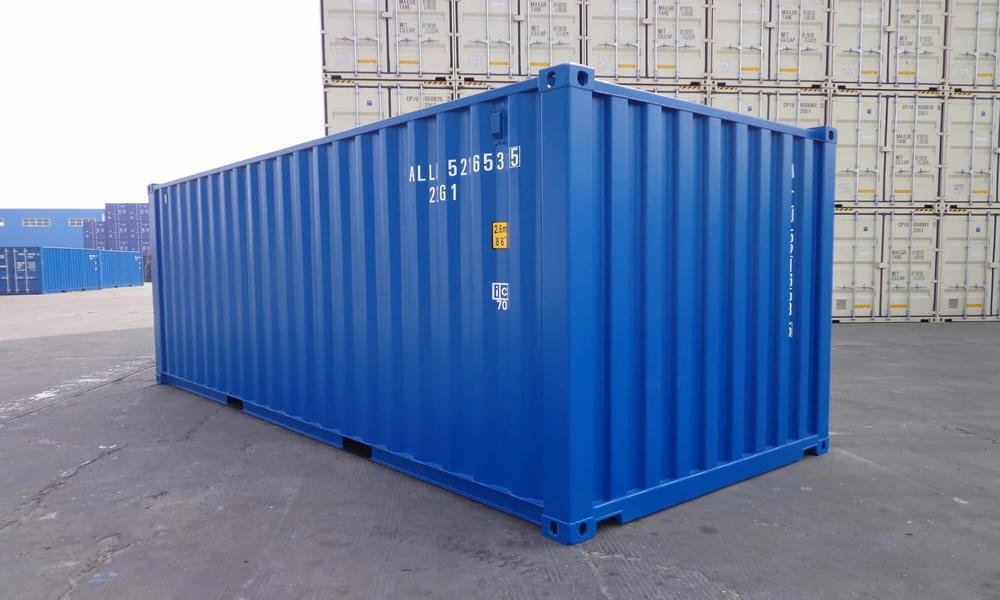
A one-trip container has made a single journey, so it arrives with fresh paint, intact weather seals, and little wear. Rust and dents are limited. Choose this type if appearance matters to you or if you plan a custom build.
Used Containers
Used containers cost less and use the same solid steel as new ones. MoCan Containers inspects each used unit to confirm it is wind and watertight, lockable, and sound in structure.
You may see faded paint, a few dents, or surface rust. Those marks change the look and leave the performance and security alone. A coat of paint can improve the look and extend the life of the unit.
Most buyers who plan long-term use pick used containers, and they use them for tool storage, farm and ranch supplies, construction materials, and workshops.
Pick the Right Size
MoCan Containers sells and rents 20-foot and 40-foot containers. Smaller 8-foot and 10-foot units are available from time to time, depending on inventory.
The 20-Foot Container
This size fits driveways, yards, and small job sites. Inside, it measures 19 feet 4 inches long and 7 feet 8 inches wide. It suits home projects, moderate storage, and small business inventory. Plan for about 70 feet of straight, clear space for delivery.
The 40-Foot Container
This unit gives you twice the length, with an inside length of 39 feet 5 inches and an inside width of 7 feet 8 inches. The door opening is 7 feet 8 inches wide and 8 feet 5 inches high. It works well for large equipment, bulk materials, hay, and warehouse overflow. Plan for about 100 feet of straight, clear space, plus room for the truck and trailer to turn.
I want you to know that one 40-foot unit can cost less than several smaller rentals. It also holds good resale value if you buy.
Check Your Site Before You Decide
Many people choose a size and then find the delivery truck cannot reach the spot. Walk your property and check these items:
1. Measure the length of the clear path from the road to the spot.
2. Look for low wires, tree limbs, and tight gates.
3. Pick a spot with firm, fairly level ground.
4. Think about which way the doors should face so you can load and unload with ease.
MoCan Containers reviews your space and access with you before the drop-off. Their tilt-bed trailers let the driver place the container where you want it.
Why I Recommend MoCan Containers
MoCan Containers is a local, family-owned business with yards in Bozeman and Billings. Their Bozeman yard sits at 39 Jays Way in Gallatin Gateway and serves the Gallatin Valley, Paradise Valley, and the rest of southwest Montana.
Here is why they stand out to me:
- They keep what they describe as the largest inventory of containers within a 300-mile radius.
- You choose your exact container. You walk the yard, inspect the unit, and they deliver that same one.
- They offer both sales and rentals, in new and used condition.
- They deliver across Montana, and the fee stays affordable over long distances.
- They offer custom modifications if you want a studio, workshop, or small shop.
Call to schedule a yard visit in Bozeman. Both yards are open Monday through Thursday from 8:00 to 5:00, and they take Friday through Sunday visits by appointment.
A Simple Way to Decide
Follow these steps:
1. Write down how many months you need the space.
2. List what you will store, and pick a size that fits it.
3. Measure your delivery path and your spot.
4. Decide if you want new or used condition.
5. Call MoCan Containers at (406) 661-1684 for a quote and an inventory check.
Pricing depends on size, condition, and current supply, so a phone call gives you the real number. Once you know it, compare the cost of renting for your full time frame against the cost of buying. The answer is usually clear after that.